

Designing Quiet Aircraft: The Hidden Physics of Propeller Noise
From the Ffowcs Williams–Hawkings equation to blade-vortex interaction, tip Mach scaling laws, and eVTOL distributed propulsion — a complete technical framework for understanding and controlling the acoustic signature of rotating blades.
In subsonic aviation — particularly in turboprops, distributed propulsion systems, and the emerging eVTOL sector — the dominant acoustic signature is generated not by the engine core, but by the rotating blades. Propellers convert shaft power into thrust through aerodynamic loading, but in doing so they generate unsteady pressure fields that radiate as sound. The central challenge for the aeroacoustic engineer is that noise is not a byproduct of this process — it is a direct physical consequence of how aggressively aerodynamic energy is introduced into the flow. High efficiency often requires strong pressure gradients and concentrated loading, which inherently increase acoustic emission.
The most effective quiet propeller designs do not eliminate aerodynamic energy — they redistribute it in space and time to reduce peak pressure fluctuations and minimize coherent flow structures.
This creates a fundamental engineering tension that cannot be resolved by treating noise as a post-design compliance problem. Acoustic performance must be designed in from the earliest stages — alongside thrust, efficiency, weight, and structural integrity. What follows is a complete technical framework for that design process.
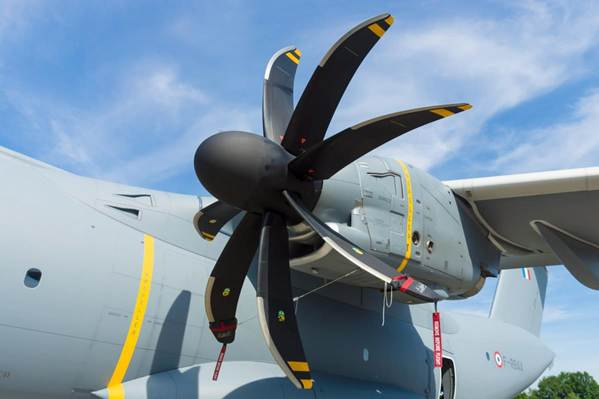
1. Governing Aeroacoustic Theory: The FW-H Framework
The theoretical foundation for propeller noise prediction is the Ffowcs Williams–Hawkings (FW-H) equation — a generalization of Lighthill’s acoustic analogy extended to account for moving surfaces such as rotating blades. The FW-H formulation is the standard in computational aeroacoustics because it rigorously separates acoustic sources by physical mechanism, enabling targeted design intervention.
Acoustic sources are categorized into three types, each with a distinct physical origin and a distinct spatial radiation pattern:
Generated by fluid displacement as the blade volume moves through the field. Scales with blade thickness and tip speed. Dominant in high-speed rotors. Omnidirectional radiation pattern.
Generated by unsteady aerodynamic forces acting on the fluid — lift and drag fluctuations along the blade. Dominant mechanism for subsonic propellers. Directional radiation — maximum in the plane of rotation.
Generated by volume sources in the turbulent flow field. Becomes significant at transonic tip speeds when shock-turbulence interaction creates volume acoustic sources. Negligible for well-designed subsonic rotors.
The engineering implication of dipole dominance is direct: to reduce propeller noise, reduce unsteady aerodynamic loading. Every blade design decision — chord distribution, thickness, twist, planform sweep, tip geometry — can be evaluated through this lens. A design change that reduces loading fluctuations in space or time will reduce acoustic emission.
2. Blade Passing Frequency and the Tonal Noise Spectrum
The primary tonal component of propeller noise is the Blade Passing Frequency (BPF), which defines the fundamental periodicity of the acoustic pressure field seen by an observer:
BPF is not merely a frequency label — it governs how noise is perceived by human observers and how it propagates through the environment. Lower BPF values produce lower-frequency tones that propagate further and penetrate structures more effectively. Higher BPF values may produce tones that are perceived as more annoying despite lower absolute sound pressure levels. The psychoacoustic dimension of noise — how humans perceive and react to different frequency content — is as important as the physical acoustic power in community noise certification.
Higher harmonics of BPF often dominate the perceived acoustic spectrum, particularly when blade loading is non-uniform around the azimuth. Any asymmetry in inflow — nacelle blockage, wing wake ingestion, atmospheric turbulence — generates sub-BPF and inter-harmonic content that broadens the tonal noise signature and complicates reduction strategies.
3. Tip Mach Number: The Most Critical Single Parameter
Tip Mach number is the single most acoustically critical design parameter in propeller design. As M_tip approaches transonic conditions (~0.75–0.85), compressibility effects become significant: local supersonic patches form on the blade tip suction surface, shock waves develop, and the interaction between the shock and the turbulent boundary layer creates a strongly nonlinear noise source that cannot be captured by linear acoustic theory.
The V⁵ scaling law has a profound engineering consequence: a 10% increase in tip speed produces approximately 61% more acoustic power. This strongly favors large-diameter, low-RPM designs over small-diameter, high-RPM designs at equivalent thrust — even when both operate in the subsonic regime. Every knot of unnecessary tip speed is acoustically expensive.
4. Blade Element Momentum Theory: Linking Loading to Noise
A practical propeller design begins with Blade Element Momentum (BEM) theory, which resolves the blade into spanwise elements and computes local aerodynamic forces as a function of local inflow angle, chord, and airfoil section properties. The thrust contribution per unit span:
The distribution of dT/dr along the blade span is the acoustic design variable that BEM makes directly accessible. Tip-concentrated loading — where most thrust is generated in the outer 20–30% of the blade radius — produces strong tip vortices, high local pressure gradients, and concentrated BVI events when those vortices encounter downstream blades or structures. Inboard-biased loading distributes the acoustic source region over a larger span, reducing peak fluctuations and tip vortex strength simultaneously.
Pitch Control and Operating Point Management
Variable-pitch propellers are essential for managing the efficiency-noise trade across the full flight envelope. At low airspeed, fine pitch maintains adequate blade angle of attack without over-speeding the rotor — preventing unnecessary tip Mach increases during the acoustically critical takeoff and climbout phases, where community noise exposure is highest. At cruise, coarse pitch allows reduced RPM while maintaining thrust efficiency, directly reducing BPF and tip Mach number.
The most acoustically sensitive operating points are approach and low-altitude climbout — not cruise. Propeller noise certification (ICAO Annex 16, FAA Part 36) evaluates these conditions explicitly, and designs that optimize cruise performance while neglecting the low-speed acoustic environment routinely fail certification by significant margins.
5. The Efficiency–Noise Trade Space
| Design Parameter | Change | Effect on Noise | Effect on Efficiency | Structural/Integration |
|---|---|---|---|---|
| RPM | Increase | Worse — higher BPF & M_tip | Better at fixed diameter | Higher centrifugal loads |
| Diameter | Increase | Better — lower tip speed | Better — lower induced losses | Ground clearance, weight |
| Blade Count | Increase | Better — lower per-blade loading | Neutral to slight penalty | Weight, hub complexity |
| Blade Loading | Increase | Worse — stronger pressure fluctuations | Better thrust/weight | Higher fatigue loads |
| Blade Sweep | Add aft sweep | Better — reduces tip shock coherence | Slight penalty possible | Bending-torsion coupling |
| Tip Winglets | Add | 1–4 dB reduction in tonal components | Modest change | Minor weight addition |
6. Vortex Dynamics and Blade-Vortex Interaction (BVI)
Tip vortices are among the strongest contributors to propeller tonal noise and represent one of the most challenging physical phenomena to manage in quiet rotor design. Each blade generates a concentrated tip vortex that convects downstream in a helical pattern. When a following blade — or a downstream rotor in a contra-rotating configuration — intersects this vortex, the rapid pressure change as the blade cuts through the vortex core produces a strong impulsive noise event: Blade-Vortex Interaction (BVI).
BVI noise is characterized by its impulsiveness — short-duration pressure spikes that the human auditory system perceives as highly annoying even at moderate absolute sound levels. It is the dominant noise mechanism in helicopter approach noise and is increasingly relevant to eVTOL vehicles where multiple rotors operate in close proximity within each other’s wake structures.
The vortex shed by a blade tip carries concentrated angular momentum that persists far downstream. Unlike distributed loading noise, which decays with distance from the source, vortex-induced noise is an interaction event — it occurs where the vortex trajectory intersects the blade path. Managing BVI therefore requires either moving the vortex (by changing its trajectory through loading redistribution or tip geometry) or moving the blade away from it (by changing rotor axial separation or blade phase offset). You cannot simply reduce vortex strength without also reducing tip lift — which directly trades against thrust efficiency.
Strategies for reducing BVI noise in multi-rotor systems include inboard-biased spanwise loading to weaken tip vortices at the source, increased axial separation between rotor stages to allow vortex diffusion before blade encounter, swept or scimitar blade planforms that reduce the coherence of vortex rollup, and rotor phase offsets that temporally distribute BVI events rather than allowing them to occur simultaneously across all blades.
7. Vibration and Aeroelastic Coupling
Propeller noise is not purely an aerodynamic phenomenon. The blade is a flexible structure operating in an unsteady flow field, and the coupling between aerodynamic loading and structural response — aeroelasticity — creates feedback mechanisms that directly influence both noise and efficiency.
Blade deformation under aerodynamic load changes local angles of attack along the span, modifying the loading distribution and hence the acoustic source strength. A blade that twists nose-down under load (wash-out) redistributes lift inboard, reducing tip loading and tip vortex strength — a beneficial aeroelastic response for noise. A blade that twists nose-up (wash-in) concentrates loading at the tip, worsening noise. Composite blade construction enables the fiber orientation to be designed to produce specific aeroelastic responses — a capability unavailable in isotropic metallic blades and one of the strongest arguments for composite propeller blades in acoustically constrained applications.
Structural blade natural frequencies must be tuned away from BPF harmonics. Resonance between a blade bending or torsion mode and an integer multiple of BPF produces amplified vibration, increased fatigue damage, and radiated noise that far exceeds what aerodynamic analysis alone would predict. This frequency placement requirement enters the structural design as a stiffness constraint — and for composite blades, it can be satisfied by laminate architecture without changing aerodynamic geometry.
8. Advanced Tip Geometries: Winglets for Rotors
The application of winglet technology — well-established in fixed-wing aircraft for induced drag reduction — to propeller blade tips has been an active research area for a decade, motivated by the same underlying physics: weakening the tip vortex by redirecting trailing-edge circulation outboard or inboard rather than allowing it to roll up into a concentrated core.
Research on winglet propellers — including systematic studies varying winglet height from 4 to 8 mm on UAV-scale blades with upward and downward facing orientations — has demonstrated tonal noise reductions of 1–4 dB in primary BPF components, with modest and geometry-dependent changes to propulsive efficiency. The key advantage is that this is a purely passive, geometry-only intervention: no moving parts, no active control, no added system complexity. For vehicles where acoustic certification margins are tight, a 2–3 dB passive improvement at zero system complexity cost is highly valuable.
The structural design challenge for winglet propellers is the bending moment introduced at the winglet-blade junction during high-centrifugal-load conditions. Composite blade construction again provides the design freedom to accommodate this load path without excessive weight penalty, through local reinforcement of the tip section.
9. Real-World Aircraft: Three Points on the Efficiency–Noise Curve
| Aircraft | Configuration | Acoustic Strategy | Trade |
|---|---|---|---|
| ATR-72 | 6-blade, large diameter, lower RPM | Low tip speed, low community noise, preferred for noise-sensitive airports | Lower cruise speed |
| Bombardier Q400 | 6-blade, higher RPM, ANVS system | Higher cruise performance; active noise & vibration suppression compensates in cabin | Larger acoustic footprint externally |
| GE/SNECMA UDF | Open counter-rotating rotor, no nacelle | 25–30% fuel savings vs. turbofan — but unacceptably high tonal noise levels shelved the program | Community acceptance failure |
The GE/SNECMA UDF case is the definitive lesson in acoustic-performance co-design failure. The open rotor configuration achieved extraordinary propulsive efficiency — approaching turboprop levels at turbofan speeds — but the counter-rotating rotor interaction produced tonal noise that communities and regulators found unacceptable. The program was shelved in the late 1980s despite its aerodynamic success. Its acoustic failure continues to inform next-generation open rotor research including CFM’s RISE program and Avio/Leonardo’s open rotor work.
10. eVTOL and Urban Air Mobility: The New Frontier of Acoustic Design
The emergence of electric vertical takeoff and landing vehicles has created the most acoustically demanding propeller design environment in aviation history. eVTOL vehicles operate in dense urban environments — directly over people, buildings, and noise-sensitive communities — where community noise tolerance is orders of magnitude lower than at conventional airports. The FAA and EASA certification frameworks for eVTOL noise are still developing, but the design constraint is clear: vehicles that sound like helicopters will not achieve public acceptance, regardless of their zero-emission propulsion credentials.
eVTOL design introduces several acoustic complexities absent from conventional propeller systems. Multiple rotors operating in close proximity generate mutual wake interactions — each rotor operates in the disturbed inflow of adjacent rotors, creating BVI scenarios that are highly sensitive to rotor separation, tilt angle, and relative phasing. The distributed propulsion architecture that gives eVTOL its redundancy and control authority simultaneously creates a complex multi-source acoustic environment that conventional design tools do not handle well.
The most effective eVTOL acoustic strategies leverage the electric propulsion system’s unique capabilities: large-diameter, very-low-RPM rotors made possible by high-torque direct-drive electric motors; precise rotor phase control enabled by independent motor controllers; and non-uniform blade spacing — azimuthal gaps between blades are deliberately made unequal to spread tonal energy across frequencies rather than concentrating it at BPF harmonics, reducing the perceived tonality that makes rotorcraft noise so annoying to urban communities.
11. Engineering Design Guidelines for Quiet Propulsion Systems
Maintain M_tip below 0.75–0.80 to stay in the linear acoustic regime. Given V⁵ scaling, every increment of unnecessary tip speed is disproportionately expensive acoustically. Design for tip speed reduction before any other noise mitigation.
For a given thrust requirement, a larger-diameter, lower-RPM design is almost always acoustically superior to a smaller-diameter, higher-RPM design — and often aerodynamically superior as well through reduced induced velocity.
Avoid tip-concentrated loading. Design spanwise loading distributions that peak at 60–75% radius rather than at the tip. This simultaneously weakens tip vortices, reduces BVI intensity, and decreases peak surface pressure gradients.
Aft blade sweep reduces the coherence of tip vortex rollup and delays shock formation in transonic flow. Composite blade construction enables sweep without the bending-torsion coupling penalties that limit swept metallic blades.
Structural resonance between blade natural frequencies and BPF multiples amplifies both vibration and radiated noise. This is a structural design constraint, not an afterthought — it must enter the design loop from day one.
Unequal azimuthal blade spacing spreads tonal energy across frequencies rather than concentrating it at BPF and harmonics. Particularly effective for multi-rotor eVTOL systems where tonal annoyance is the primary community acceptance barrier.
Noise is not a post-design compliance check. The GE/SNECMA UDF program spent a decade on aerodynamic excellence and failed at the acoustic gate. Every design decision from blade count selection through tip geometry must be evaluated for its acoustic consequence from day one.
Conclusion
Quiet propeller design is fundamentally about controlling how aerodynamic energy is introduced, distributed, and radiated. The governing physics — FW-H source decomposition, V⁵ tip speed scaling, BPF tonal structure, BVI impulsiveness — are well understood. The engineering challenge is translating that physics understanding into design decisions that simultaneously satisfy thrust, efficiency, structural integrity, and acoustic constraints across a complete flight envelope.
The most effective designs do not eliminate energy — they redistribute it in space and time. Distributed spanwise loading instead of tip-concentrated loading. Large diameter instead of high RPM. Swept planforms instead of straight planforms. Multiple lower-loaded blades instead of fewer highly-loaded blades. Non-uniform spacing instead of equal spacing. Each of these choices makes the same thrust at lower acoustic cost, by changing where and when pressure fluctuations occur rather than how much total aerodynamic work is done.
For the next generation of aerospace engineers working on eVTOL, next-generation turboprops, and open rotor propulsion: the aeroacoustic engineer and the aerodynamic performance engineer are solving the same problem from different directions. The vehicles that succeed — commercially, operationally, and in community acceptance — will be designed by teams that understood this from the beginning.
Ready to Enroll?
NovaEd AeroLab — Spring II Classes Now Open
Aerospace STEM enrichment for kids Grades 1–8, taught by a working senior aerospace engineer with 30+ years of experience including human spaceflight. Real engineering. Real flight. Real fun.
📍 Orange
Starting Wed Apr 8
Level 1A Gr 1–3 · Wed 4:00–5:30
Level 2A Gr 4–7 · Wed 5:30–7:00
Level 3A Gr 8+ · Wed 7:00–8:30
📍 Corona
Starting Thu Apr 10
Level 1A Gr 1–3 · Thu 4:00–5:30
Level 2A Gr 4–7 · Thu 5:30–7:00
Level 3A Gr 8+ · Mon 5:30–7:00
Level 1C Gr 1–5 · Mon 4:00–5:30 ✦
Level 2C Gr 5+ · Mon 5:30–7:00
📍 Fontana
Starting Fri Apr 11
Level 1A Gr 1–3 · Fri 2:30–4:00
Level 2A Gr 4–7 · Fri 4:00–5:30
Propeller noise engineering design